
Doing Your Own Books? Watch Out for This Common Mistake
If you’re managing your own bookkeeping, one of the easiest mistakes to make is assuming that every deposit is income and every withdrawal is an expense. Sometimes that’s true. Sometimes it definitely isn’t. Money can move in and out of your business for all kinds of reasons, and the important part is understanding what actually happened before you decide how to categorize it.
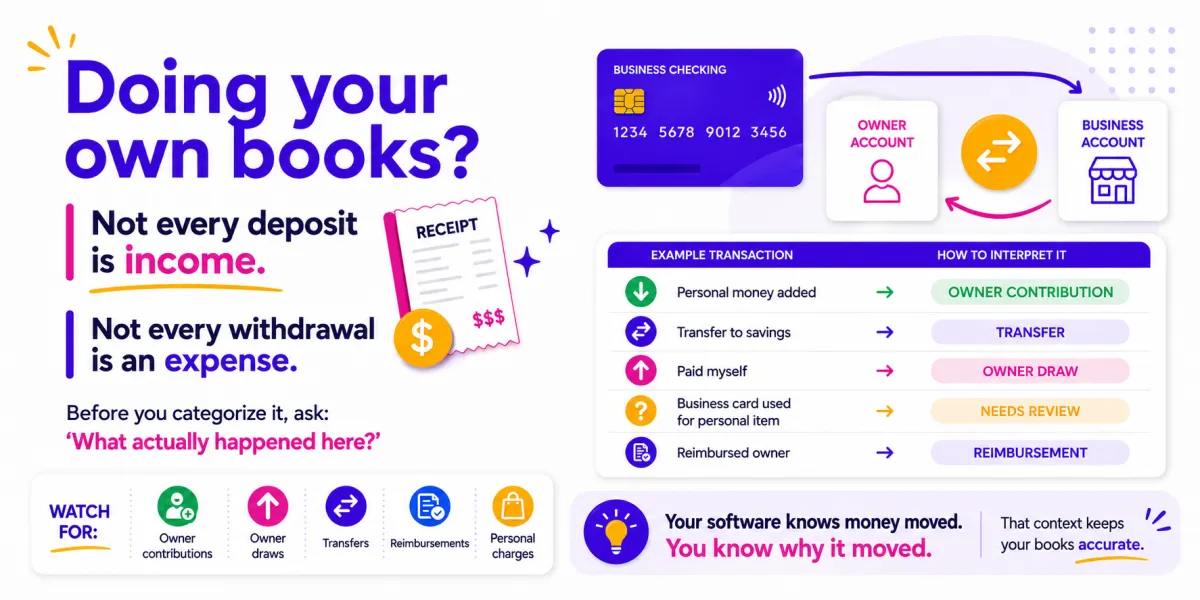
For example, if you put personal money into the business to cover expenses, that may be an owner contribution. The bank balance went up, but the business didn’t suddenly make more money. If you move money from checking to savings, that’s usually just a transfer. One account went down, another went up, but nothing was earned and nothing was spent.
If you pay yourself, reimburse yourself, or accidentally use the business card for something personal, those transactions all need to be treated differently too. The fact that money left the business account doesn’t automatically make it a business expense.
Ask What Actually Happened
When you’re doing your own books, one of the best habits you can build is to stop and ask:
“What actually happened here?”
That sounds simple, but it can save you from a lot of messy cleanup later. Instead of looking only at the name of the transaction or whatever category your bank feed suggests, think about what the transaction actually represents.
Was money added by the owner?
Was money taken out by the owner?
Was it transferred between accounts?
Was someone reimbursed?
Was the business card used for something personal?
Those details matter because each of those situations can affect your books differently.
Don’t Let the Bank Feed Make the Decision for You
Bank feeds and automatic categorization can be incredibly helpful, especially if you’re managing your own bookkeeping. They can also make it really easy to click “accept” without thinking much about what you’re accepting.
Automation is helpful, but it’s not psychic. Your bookkeeping software can see that money moved. It can see the amount, the date, and maybe the merchant or description. What it can’t see is the reason behind the transaction. That part still needs you.
If something looks unusual, take a minute before categorizing it. Add a memo. Keep the receipt. Check where the money came from or where it went. If you’re not sure what it was, investigate instead of guessing. Five minutes of clarification today can save a lot more than five minutes when you’re trying to clean up the books months later.
A Few Things to Watch For
If you’re handling your own bookkeeping, pay extra attention to owner contributions, owner draws or distributions, transfers between accounts, reimbursements, and personal purchases made through the business. These are all common transactions, and none of them automatically mean something is wrong. They just need to be recorded based on what they actually are.
This is also why keeping personal and business activity separate is so important. The cleaner that separation is, the easier it is to understand what’s happening in the business and the less detective work you’ll have to do later.
Your Software Knows Money Moved. You Know Why.
That’s really the takeaway.
Good bookkeeping isn’t just about making sure every transaction has a category. It’s about making sure the category reflects what actually happened. Your software knows money moved. Only you know why it moved. Keeping those two things connected is what makes your books accurate, useful, and a whole lot easier to deal with when tax time comes around.